
Sister Mary Imelda, MICM
For God
and King
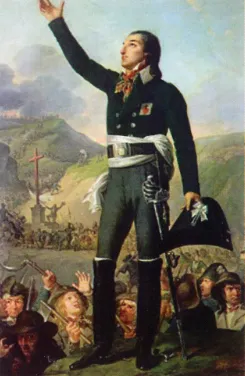
In the year 1789, there began a series of vicious attempts to undermine the authority of the Catholic Church in France, and to rid “the Eldest Daughter of the Church” of any outward symbols or appearances of Catholicism. Referred to as the French Revolution, this properly called “Reign of Terror” was marked by various laws and bills reducing the clergy to the status of civil servants, abolishing religious orders, forbidding monastic vows, and nationalizing Church property. Bishops, priests, religious, and many members of the aristocracy were persecuted and killed. On January 21, 1793, his most Christian majesty, Louis XVI of France, was guillotined like a common criminal in the public square in Paris, an event that caused even Protestants of England to recoil in horror and shock. Finally, on February twenty-fourth of that same eventful year, 1793, a decree was passed ordering the conscription of three hundred thousand men to fight in the revolutionary army.
Ironically, those conniving atheistic politicians who ordered these anti-religious decrees had unwittingly set the stage for what was to be one of the most inspiring tales of heroism for Catholics throughout the world for centuries to come.
"You who were born in the land of the Vendee... are the heirs of men and women who were courageous enough to remain faithful to the Church of Jesus Christ at a time when her freedom and independence were threatened... In the numerous acts of witness that have come down to us, it is moving to see that the people of the Vendee remained attached to their parishes and their priests in spite of the cruelty of persecution."
Pope John Paul II, September 19, 1996
The Land of the Vendee
In the southwestern part of France in a region known to its inhabitants as the Bocage, or Hedge Country, Catholicism still reigned though under severe constriction, amidst the hard-working natives.
Here aristocrats and peasants lived in perfect harmony with one another. Educated people they were, but untouched by the philosophies of Voltaire, Rousseau, and other atheistic writers of the time. The villages of the Bocage centered around the parish churches; Sunday Mass obligations were taken very seriously. Seventy-eight years before, Saint Louis Marie de Montfort had preached his missions in many of these parishes, and his teachings and inspirations were still alive in the Bocage. Devotions to the Sacred Heart of Jesus, to the Blessed Virgin Mary, and to the Holy Rosary, flourished in this region, nor could they be suppressed by any civil authority. The people of the Vendee, the name given to the Bocage by the Revolutionary Government, clung to their Faith, their Mass, and their priests with ardent zeal. Thus, when the decree for conscription reached the Vendee, its people decided they had seen and heard enough. Le bon Roi, the good King, had been murdered, and their Faith was under attack. It was time for action! Fighting for the army of the regime that persecuted religion was out of the question; as one peasant made clear, “They have killed our King; chased away our priests; sold the goods of our Church; eaten everything we have; and now they want to take our bodies. No, they shall not have them!” For the Vendeans, there could be only one other alternative.
We are the youth of God, the youth of fidelity! This youth will preserve, for its own and for its children, true humanity and liberty of soul."
The Rising of the Vendee
Tuesday, March 12, 1793, was the day set in the Vendee for selecting the conscripts for the revolutionary army. Two thousand peasants, armed with clubs, pitchforks, and swords, gathered in the square of Saint-Florent-le-Vieil. As the drawing lots began, a shot from the crowd killed one of the Revolutionary speakers. Led by various workmen and their sons, the peasants charged the National Guardsmen, shouting, Vive le roi! Vive les bons pretres! “Long live the King! Long live the good priests!” Four peasants were killed, and forty wounded, but the Guardsmen, lacking both the numbers and the fighting spirit of the Vendeans, fled to an island in the Loire River. The War of the Vendee had begun.
The Leaders of the Vendee
Within the next thirty-six hours, several individuals rose from their quiet country homes to lead their fellow Catholics in the sacred cause for which they fought. These leaders were defined not only by their undaunted courage but by their profound love for the Catholic Faith.
Jacques Cathelineau was a peddler from the Vendée. Upon hearing of the uprising on March 12th, he immediately decided to leave his home to rally his neighbors and join the Catholic forces. Despite his wife’s pleas to stay for the sake of their five children, Cathelineau told her to have courage, stating: “God, for Whom I shall fight, will protect you,” he said, Armed with a rosary, a pistol, and a badge of the Sacred Heart on his tunic, he met twenty-seven young men in the village square. By midday, five hundred men had joined their ranks. Cathelineau addressed them with these words: “My friends, never forget that we are fighting for our holy religion.” The small army then fell to their knees and sang the hymn Vexilla Regis (“The banners of the King go forth”). By the end of that single day, he had conquered four towns and captured two cannons.
The most celebrated Vendean leader was Charette, an accomplished naval officer with nine years of military experience, including fighting in the American Revolution. Despite his credentials, he was initially reluctant to involve his forces in the uprising, knowing the chances of victory against the revolutionary army were slim. However, after persistent urging from a group of peasants, he agreed to lead them under the strict condition: “I will be the master, and When I command you will obey, and I will break the head of anyone who does not obey.” Like Cathelineau, Charette pinned the badge of the Sacred Heart on his coat. After taking an oath never to return home unless victorious or dead, he led his men into battle with these immortal words: “Our country is ourselves. It is our villages, our altars, our graves, all that our fathers loved before us. Our country is our Faith, our land, our King but their country, what is it? Do you understand? Do you? They have it in their brains; we have it under our feet. The world that they call new and that they wish to found in the absence of God is as old as the Devil. They say we are the slaves of ancient superstitions; it makes us laugh! In the face of these demons who rise up again century after century, we are youth, gentlemen! We are the youth of God, the youth of fidelity! This youth will preserve, for its own and for its children, true humanity and liberty of soul.”
"The people of the Vendée... clung to their Faith, their Mass, and their priests with ardent zeal."
A third leader from the Vendee was Jean-Nicolas Stofflet, the grandson of a German peasant. When the uprising began, Stofflet, a natural leader and disciplinarian, was able to gather the untrained peasants of his area and join forces with Cathelineau, thus forming what came to be known as the Catholic and Royal Army. Together, the two generals celebrated their first victory in the town of Cholet, shortly after the uprising began.
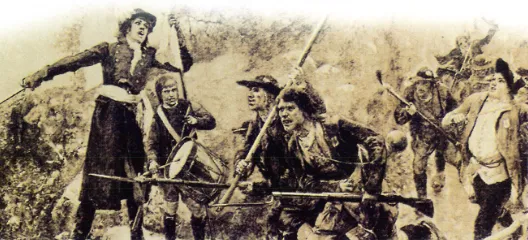
Henri Marquis le La Rochejaque-lin, yet another leader of the Catholic cause, was only twenty years old when the Revolution broke out in all its fury. In April of 1793, peasants and farmers gathered outside his father’s house, begging the young man, scarcely past boyhood, to be their leader. Monsieur True Devotion to Mary Henri at first refused. When a farmer turned to him and said, “If your father had been here, he would not have been afraid to fight,” the nobleman changed his mind. The next morning, to the two hundred armed men gathered before him he said, “My friends, if my father had been here, he would have inspired you and given you confidence. As for me, I am no more than a child, but I hope to be able to prove to you by my conduct that I am worthy to lead you. If I advance, follow me; if I retreat, kill me; if I am killed, avenge me.” Monsieur Henri supplied the Catholic army with much-needed guns and powder, which along with his vitality and un-daunted spirit won many victories for the Vendeans.
"...As We forgive Those Who Trespass Against Us."
The Catholic spirit of Vendean leaders included not only fortitude, but also mercy for their enemies. They, who daily recited the Our Father, knew that God would forgive their trespasses only if they were willing to forgive those who trespassed against them. As a result, revolutionary prisoners were spared from death on several occasions.
At the Battle of Cholet in October of 1793, the Vendean leader, the Marquis de Bonchamps, was fatally wounded. His army had retreated across the Loire River, and as he lay dying in a house in Saint-Florent-leVieil, he received word that his men, heartbroken and defeated wished to shoot all the revolutionary prisoners. Shocked by this plan, Bonchamps gave his last command to his army and ordered that the prisoners be spared. The order was received, and the cry went out through the night “Mercy! Mercy! Bonchamps commands it!” Once again, the Catholics spared their prisoners, and after receiving the last sacraments, Bonchamps died a holy death on October 18, 1793.
Years later, a sculptor known as David d’ Angers, erected a statue in the abbey church of Saint Florent depicting the dying Bonchamps. The inscription on the statue reads thus: Grace aux prisonniers. Bonchamps l’ordonne!” “Mercy to the prisoners. Bonchamps orders it!” The reason d’Angers erected this statue is quite clear: his father was one of the prisoners spared by Bonchamps.
We are the youth of God, the youth of fidelity! This youth will preserve, for its own and for its children, true humanity and liberty of soul."
"Faithful to the Church of Jesus Christ"
The Catholic and Royal Army possessed many military advantages. Experienced hunters, these men had not only excellent abilities in handling weapons, but also knowledge of the countryside. The main tactic of the Vendean soldiers was not unlike that of the Colonial patriots of America. They hid behind trees, bushes, or fences, attacked their enemy with a volley of shots, and then ran off before the revolutionaries, or “Blues,” as they came to be called, had a chance to know where the gun firing was coming from.
The most important weapon of the Vendee was the passionate love of their religion and of their homes for which they were fighting. What they lacked in military skill, they made up for in their persevering ferocity during battle. By September of 1793, the members of the National Convention in Paris were much disturbed by 26 the reports they were receiving of the Catholic and Royal Army. They called in the elite troops of the republic, the “Mayencais”, hoping to end the war as quickly as possible. Republican General Kleber and his “invincible troops” encountered the fearless Charette and his men at Torfou. The men of the Vendee repulsed the enemy by their accurate shooting, but Kleber would not give up. Rallying his men, he set fire to the town and put the brave Catholics to flight. The retreating Vendeans reached the river Sevre in safety, only to meet their wives, a far more powerful and intimidating force than they had just been fighting. Disgusted by the men’s seeming
cowardice, the women attacked their husbands and declared that if the men would not continue the fight, they, the women of the Vendee, would. With no other choice, the frightened husbands returned to the battle, and this time, fought with even greater effort than before, and successfully routed the “invincible” forces of the Republican Army.
Not even the best troops in France could crush the fidelity and love with which the Vendeans fought for their God and King. They surely knew the consequences awaiting them, but they continued faithful even unto death.
"The Gates of Hell Shall Not Prevail..."
In a second attempt to exterminate the Vendeans, the Republican Convention ordered General Turreau to advance upon the Vendee and to “burn all that can be burned, and to bayonet every human being that you encounter.” This satanic command was executed with a horrifying and disgusting brutality that could only have come from the very gates of Hell. Churches were profaned and then destroyed; old men were tortured; women and children were left to die in agony, and houses were burned to the ground. From village to village these “infernal columns” roamed destroying everything in their path. One elderly priest, in an attempt to save his flock from these savages, was tortured and then killed in front of his parishioners. The number of helpless people killed was atrocious, crying out, like the blood of Abel, to God in Heaven.
This outrage only served to add fuel to the raging fires in the hearts of the Vendean soldiers, and their leaders lost no time in attacking the “infernal columns” and driving them forever from the Vendee. Despite the cruelty of their soldiers, the Convention’s intent to destroy the Vendee had failed, and the war continued.
"I Came Not to Bring Peace, but the Sword."
In February 1795, after almost two years of fighting, the Republic began negotiations with the Catholic Royal Army in an attempt to restore peace to the Vendee. These terms for peace included freedom of worship, restoration of confiscated property, and the guaranteed safety of all priests. The leader Charette accepted these terms, and it seemed that peace would indeed be restored. Not surprisingly, however, the republican forces broke the peace terms on a number of occasions, and Charette realized that until Catholics received complete freedom, the war must be continued. He and Stofflet, the only remaining Vendean generals, took up arms once more. Their loyalty and True Devotion to Mary devotion were rewarded by King Louis XVIII, younger brother of Louis XVI, who named Charette “General of My Catholic and Royal Army,” and awarded Stofflet the Cross of Saint Louis. Both these heroes continued to fighting “for God and King” until their executions in 1796.
The Victory of the Vendee
Was the uprising of the Vendee successful? To an outside observer, it would hardly seem so. Their leaders were all killed; their homes were destroyed; their populace was severely decimated; their land was left desolate. The War of the Vendee, however, did not end in 1796. Another uprising took place in 1798, and by 1801, complete religious freedom was restored throughout France.
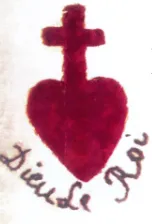
Besides this obvious victory of 1801, another Vendean victory lies hidden beneath the surface. It is the victory known to the valiant soldier of Jesus Christ, who is determined that no suffering, no evil, no force, however great, can separate him from the love of His Saviour. The people of the Vendee were willing to lay down their lives for the Faith they loved, and that in itself is a victory for Jesus Christ.