Sister Katherine Maria, MICM
True Devotion to Mary:A Slave to the Devil or a Slave of Mary
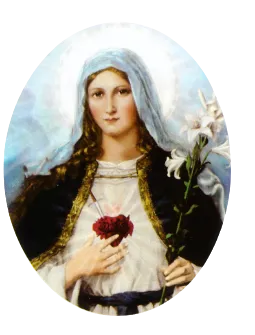
MMontfort explains the Sacrament of Baptism, a theme that runs through his writings. Because of the fall of our first parents, Adam and Eve, we contracted the stain of original sin, placing our souls in the clutches of the devil. The indelible mark of Baptism washes off the stain, freeing us and making us children of God. In the act of consecration proposed in True Devotion, a frequent renewal of our baptismal vows keeps us more deeply aware of our responsibility to live as people redeemed by Christ, even as His slaves of love. In the world there are all too many voluntary slaves to vices, addictions, relationships, material possessions, careers, just to name a few. Why then, Saint Louis asks, should not Jesus through Mary have His voluntary slaves where love is the chain that binds them and eternity is the goal? With this in view, he brings the degrading thought of slavery to a wonderful level full of peace and joy binding its adherents to the Queen of Heaven, but the uniqueness of Montfort’s spirituality does not end there. It boldly claims a total giving of oneself, body and soul and even the spiritual merits of our good actions, past, present and future. No religious order, claims Saint Louis, reduces itself to such poverty as to make such an oblation of its eternal merits. It is a Total Consecration in every way.
“We therefore,” Saint Louis De Montfort states, “follow the sentiments of the saints and of many great men, call ourselves and make ourselves the loving slaves of the most holy Virgin, in order to be, by that very means, more perfectly the slaves of Jesus Christ. Our Blessed Lady is the means Our Lord made use of to come to us. She is also the means which we must make use of to go to Him. For she is not like all other creatures who, if we should attach ourselves to them, might draw us away from God than draw us near Him. The strongest inclination of Mary is to unite us to Jesus Christ, her Son; and the strongest inclination of the Son is that we should come to Him through His holy Mother.”
"We therefore, follow the sentiments of the saints and of many great men, call ourselves and make ourselves the loving slaves of the most holy Virgin, in order to be, by that very means, more perfectly the slaves of Jesus Christ.
Saint Louis de Montfort
The third and final chapter of the first part of the book on the “choice” of true devotion uncovers something understood in its title True devotion. The devil seeks to counterfeit the real devotion and detour those seeking Mary. Saint Louis identifies seven categories of false devotions to Mary. The first he calls the critical, comprised of proud scholars and self-sufficient spirits, who have some love for Mary, but who criticize all practices of devotion, miracles, and pious stories. The second group, the scrupulous devotees, are afraid of being too devout to Our Lady, out of respect to Our Lord. The third category are the external devotees, who make all their devotion to Mary consist in outward practices, without amending their lives, doing violence to their passions, or imitating the virtues of the holy Virgin.
Presumptuous devotees are next. These are sinners who are abandoned to their passions. They are lovers of this world, who under the fair name of Christians and clients of Mary, conceal pride, avarice, impurity, drunkenness, anger, swearing, detraction, injustice or some other sin. Their devotion is only a delusion of the devil. They lie to themselves that their shallow devotion, wearing of medals or scapulars will protect them despite the lifestyle they lead.
Inconstant devotees are probably the most prevalent: those who from levity, change their practices of devotion, or give them up altogether, at the least temptation. They change like the moon. Hypocritical devotees join confraternities and wear the outward signs of the Blessed Virgin in order to pass for good people. The last group are, the interested devotees. These have ulterior motives for following Our Lady. They love her when they need something; otherwise she is forgotten.
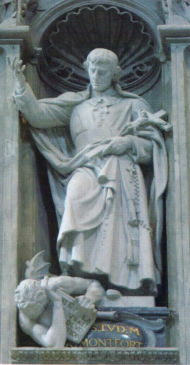
"I clearly foresee that raging beasts shall come in fury to tear with their diabolical teeth this little writing and him whom the Holy Ghost has made use of to write it, or at least to smother it in the darkness and silence of a coffer, that it may not appear."
Saint Louis de Montfort
Saint Louis counters these false devotees with a description of the true devotees of Mary whose attributes are: interior, tender, holy, constant, and disinterested. Montfort elaborates on the qualities of each. It is in this chapter that he writes, “I clearly foresee that raging beasts shall come in fury to tear with their diabolical teeth this little writing and him whom the Holy Ghost has made use of to write it, or at least to smother it in the darkness and silence of a coffer, that it may not appear. They shall even attack and persecute those who shall read it and carry it out in practice. But what matter? On the contrary, so much the better! This very foresight encourages me, and makes me hope for great success; that is to say, for a great squadron of brave and valiant soldiers of Jesus and Mary, of both sexes, to combat the world, the devil and corrupt nature, in those more than ever perilous times which are about to come.”
Part II
The next section of the book begins with a study of the nature of devotion to the Virgin Mary. Here Montfort examines in greater detail the perfect and entire consecration of oneself. “All perfection consists in being conformed, united, and consecrated to Jesus Christ… Now Mary, being the most conformed of all creatures to Jesus Christ, it follows that of all devotions, that which most consecrates and conforms the soul to Our Lord is devotion to His holy Mother, and that the more a soul is consecrated to Mary, the more it is consecrated to Jesus.”
How are we to do this? In order to belong to Our Lady we must give her all we have. “That means,” Montfort explains, “we must give her all we have in the order of nature, and in the order of grace without reserving one penny, one hair, or the least of our good actions, and we must do it also for all eternity, without pretending or hoping for any other recompense, except for the honor of belonging to Jesus Christ through Mary.” What does he mean by giving all the value of our good works? Reducing this to the satisfactory and the meritorious value of our actions Montfort again explains, “The satisfactory value of a good action is that action inasmuch as it satisfies for the pain due to sin or obtains some new grace; the meritorious value, or the merit, is the good action inasmuch as it merits grace now and eternal glory hereafter.”